A Beginner’s Guide to Weight Training
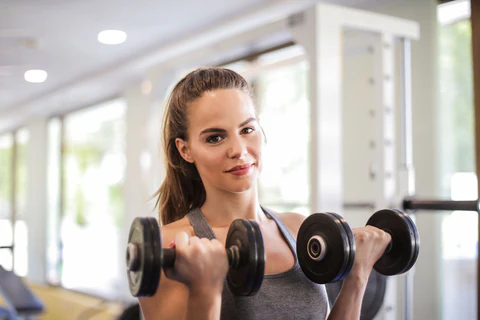
Some exercises, such as bicep curls and squats, can complement weight training at home or in the gym. You can use free weights or your own body weight with certain exercises to provide resistance.
Whether your goal is to build muscle mass or achieve a fitter, more toned body, lifting weights can help you get there.
Weight training, also known as resistance or strength training, builds stronger, leaner muscles, strengthens bones and joints, and can help keep your metabolism in a healthy state, meaning you’ll burn more calories even when you’re resting.
And the benefits of lifting weights aren’t just for the young. Weight training as we age can help combat the loss of muscle mass and mobility, as well as improve psychological well-being.
So, even if you’ve never done any type of weight training before, it’s never too late to start!
Plus, you don’t even need to belong to a gym. You can simply use your body weight for many exercises or use free weights, resistance bands, or other home fitness equipment to get results.
This article will walk you through how to get started with weight training and give you suggested exercises and workout tips for beginners.
What do you need to start weight training?
If you’ve never lifted weights, consider starting with the help of a certified personal trainer. They’ll be able to teach you proper form for specific exercises and set up a strength training program tailored to your needs.
Many gyms or fitness centers offer introductory training sessions at low or no cost, or have trainers available if you have questions. Additionally, there are many personal trainers who train their clients online, through video platforms.
While most gyms have a combination of resistance machines and free weights, such as dumbbells and barbells, you can also perform a full weight training workout at home with basic equipment.
Equipment options
You don’t necessarily need weights to build lean muscle mass and tone your body. For example, for some strength training exercises, such as push-ups or lunges, you only need your body weight to provide resistance.
You can expand your home workout options with dumbbells. A beginner’s set of adjustable dumbbells costs about $50, but the price increases as you add more weight.
Kettlebells, which are weighted balls with handles, are another popular option. Many kettlebell exercises work multiple muscle groups at once, making them effective for a full-body workout, especially if you’re short on time.
Resistance bands are also a useful addition to your workout equipment. These color-coded elastic bands provide varying levels of resistance when pulled and stretched.
A set of resistance bands can be purchased for between $10 and $60. Since they’re lightweight and portable, you can take them with you when you travel.
What to know before you begin
- Warm up. Some aerobic activities, such as jogging for 5 minutes or brisk walking, will increase blood flow to your muscles and get them ready for a good workout. Jumping rope or doing jumping jacks for a few minutes are also good warm-up options.
- Start with lighter weights. You should start with a weight that you can lift 10 to 15 times with proper form. Begin with 2 or 3 sets of 8 to 12 reps and slowly work your way up to 3 sets or more.
- Increase the weight gradually. When you can easily do the recommended number of sets and reps, increase the weight by 2 to 10%Trusted Source. Make sure this is the right weight for you before doing a full workout.
- Rest at least 60 secondsTrusted Source between sets. This helps prevent muscle fatigue, especially when starting out.
- Optimize the length of your workout. Keeping your sessions within a reasonable time frame can prevent excessive muscle fatigue and the risk of burnout. Remember that the effectiveness of your workout depends on the intensity and fitness levels of each person, rather than simply prolonging the session.
- Gently stretch your muscles after your workout. Stretching can help increase your flexibility, relieve muscle tension and reduce the risk of injury.
- Rest a day or two between workouts. Rest gives your muscles time to recover and replenish energy stores before your next workout.
Exercises for beginners
You may be especially interested in building your biceps or toning your legs, but the best resistance training program works all of the major muscle groups in your body.
In fact, overworking one muscle group at the expense of another could increase your risk of injury.
For a solid, well-rounded workout, you may want to start with the following exercises. If you include these exercises in your weightlifting routine, you’ll work most of the large muscle groups in your body.
Dumbbell single-arm rows
How to do this exercise:
- Place your left knee on the end of a sturdy bench and rest your left palm on the bench for balance.
- With your back parallel to the floor, reach down with your right hand and grab a dumbbell with your palm facing the bench.
- Slowly bring the dumbbell up to your chest. Contract your back and shoulder muscles and slowly straighten your arm back to the starting position.
- Complete one set, then switch arms and do one set with your right knee and hand on the bench.
Dumbbell shoulder press
How to do this exercise:
- Sit or stand with a dumbbell in each hand, palms facing forward and elbows out to the sides at a 90-degree angle.
- Without leaning back or arching your back, push the dumbbells up over your head until your arms are almost straight.
- Slowly return them to the starting position.
Dumbbell chest press
How to do this exercise:
- Lie on a bench with a dumbbell in each hand and your palms facing forward.
- Slowly push the dumbbells up until your arms are directly above your shoulders. Be careful not to lock your elbows.
- Slowly lower the dumbbells back to the starting position. Your elbows should be slightly lower than your shoulders.
Bicep curls
How to do this exercise:
- Sit or stand with a dumbbell in each hand in front of you, elbows at your sides and palms facing up.
- Raise the dumbbells toward your shoulders by bending your elbows but keeping them fixed at your sides.
- Reverse the push-up back to the starting position.
Triceps extensions
How to do this exercise:
- You can do this exercise sitting on a bench or standing with your feet shoulder-width apart.
- Place both hands around the handle of the dumbbell.
- Lift the dumbbell above your head so that your arms are straight.
- Keeping your elbows at ear level, bend them at a 90-degree angle and lower the dumbbell behind your head.
- Slowly straighten your arms so that the dumbbell is back above your head.
Calf raises
How to do this exercise:
- Stand on the edge of a step with your feet parallel to each other.
- Slowly raise your heels a few inches above the edge of the step and hold for a few seconds.
- Slowly lower your heels below the edge of the step and hold for a few seconds. You should feel a stretch in your calves.
- You can add resistance by holding a light dumbbell in each hand at your sides.
Weight training schedule
If your goal is primarily to build strength, three weight training workouts per week will likely provide the results you need.
According to a 2019 studyTrusted Source, doing a weight training routine three times per week is just as effective as more frequent workouts for building strength.
However, if you want to build muscle mass, you’ll need to do more reps and more frequent workouts.
You can work all of your muscle groups during a workout, doing 1-2 sets of each exercise to start and working your way up to more sets or heavier weights as the exercises become easier.
Safety tips
It’s important to focus on safety when starting a weight training routine. Pay close attention to your body and resist the temptation to push yourself too hard too quickly.
To stay safe while weight training, remember to:
- Wear proper weight lifting clothing, such as closed-toe shoes and weight lifting gloves if necessary.
- Perform each exercise slowly, paying attention to proper form.
- Use a spotter (a person who stands behind you and helps you with heavier lifts), especially when lifting weights that are raised above your head.
- Stay hydrated throughout your workout.
- Inhale before lifting and exhale during the lift. Never hold your breath when working with weights.
- Stop training if you feel sharp or stabbing pain. If the pain doesn’t go away when you stop exercising, seek medical attention.
- If you have a health condition, talk to your doctor about a weight training and exercise program that is safe for you.